Driving Alexa Routines Adoption Through Holiday Lights
Background
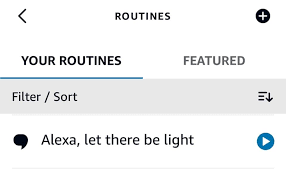
Alexa had a powerful feature set that most people never touched. Routines let you chain multiple actions into a single voice command. Smart Home let you control lights, plugs, and devices. Together, they could turn “Alexa, let there be light” into your Christmas tree lighting up the moment you walked through the door.
The problem was that only power users were using them. People who used smart home really used it, but they were a small subset of the broader Alexa customer base.
I owned the adoption strategy for Alexa Routines, looking for the right moment and the right motivation to get people past the setup friction for the first time.
The Problem
Alexa had trained its entire user base to do everything by voice. That was the product’s superpower and its adoption challenge in one. Routines and Smart Home required you to open the Alexa app, navigate through settings, connect devices, and configure automations. For a user base conditioned to just speak and have things happen, even a couple of extra steps felt like a lot.
The core tension was simple: the feature was powerful, but the setup experience broke the mental model that made Alexa work. People didn’t resist Routines because they didn’t want them. They resisted because the path to getting them required a different behaviour than the one Alexa had spent years reinforcing.
We needed a use case compelling enough to push people across that friction line. And we needed to remove as many steps as possible once they got there.
What I Did
Used the holidays as the adoption moment. Holiday lights are emotional. They’re seasonal. They’re the kind of thing where the delight of saying “Alexa, let there be light” and watching your Christmas tree light up is worth a few minutes of setup. The holidays gave us a natural window where motivation was high and the use case was immediately obvious. We didn’t have to explain what Routines could do in the abstract. We could show people one specific, delightful thing.
Built trigger-based push notifications tied to device setup. When someone connected a smart plug and named it with keywords like “tree,” “holiday,” “Christmas,” or “Hanukkah,” we sent a push notification recommending they set up a Routine. The notification deep-linked directly into a pre-built routine template that was already configured for them. The goal was to collapse the distance between “I just plugged this in” to “it’s working” into as few taps as possible. We weren’t asking people to learn a new feature. We were finishing the job they’d already started.
Used proactive Alexa suggestions for in-context nudges. After someone had connected a smart plug, Alexa would follow up with a suggestion: “By the way, would you like to set up your holiday lights as a Routine?” This met people in the voice interface they were already comfortable with, at the moment the suggestion was most relevant.
Ran a broader push to cold audiences. Beyond the in-context cohorts, we also promoted the holiday lights use case to people who had never used Routines at all. The hypothesis was that the specificity and seasonality of the use case (not “set up smart home automations” but “make your holiday lights turn on with a voice command”) would be concrete enough to drive first-time adoption even without the in-context trigger. We were testing whether the right use case could do the work that product education alone couldn’t.
The Result
- 100% year-on-year growth in Routines adoption, with the holiday lights campaign as one of the key drivers
- First high-value action for a significant cohort of users. For many, this was the first Routine they ever set up, converting them from basic voice users into engaged smart home customers.
Key Takeaway
People don’t resist features because they’re lazy. They resist features because the effort doesn’t feel worth the payoff. The entire strategy here was about changing that equation: pick a moment where the payoff is obvious and emotional, then engineer the setup experience so the effort is as close to zero as possible. Pre-built templates, deep links, contextual triggers, and in-moment suggestions all served the same goal. Make the first experience feel like it practically set itself up.